 |
Home Page |
Vietnam War era / American
|
|
French Indochina was formed in October 1887 from Annam, Tonkin, Cochinchina (now modern Vietnam) the Kingdom of Cambodia was added after the Franco-Siamese War of 1893. The years after the Second World War saw the countries of French Indo China begin a series of Guerrilla Wars to avoid being taken back under French rule. France’s defeat in the Indo China war in 1954, led to the Geneva Conference awarding power to the nationalist governments of Cambodia, Laos, North Vietnam, and South Vietnam. The Vietnam War, also referred to as the Second Indochina War, was fought between the communist Democratic Republic of Vietnam (North Vietnam), supported by its Communist Allies, and Republic of Vietnam (South Vietnam) supported by the U.S. On the 15th January 1973, President Nixon of the U.S. announced the suspension of offensive operations against North Vietnam. The Paris Peace Accords on, Ending the War and Restoring Peace in Vietnam, were signed on the 27th January 1973, officially ending direct U.S. involvement in the Vietnam War. The War ended with approximately 58,000 U.S. soldiers killed, 3 - 4 million Vietnamese from both sides, and 1.5 to 2 million Laotians and Cambodians. |
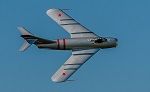
Mikoyan-Gurevich MiG-17 1952, Soviet, 711 mph The MiG-17 was an upgrade of the 668 mph MiG-15 that served in the Korean War. The MiG-17 scored its first victories during the Vietnam War, when they normally worked with MiG-21s and MiG-19s. Some North Vietnamese pilots stated they preferred the MiG-17 over the MiG-21, as it was more agile, though not as fast. The American's were shocked in 1965 when elderly, subsonic MiG-17s began shooting down Mach-2, F-105 Thunderchief fighter-bombers over North Vietnam. This led to the Americans setting up air combat training programs such as TopGun. MiG-17s shot down about 8 x F-105 Thunderchief, 3 x F-8 Crusader, and 11 x F-4 Phantom II, mainly with their 23mm or 37mm cannon. |
|
|
|
|
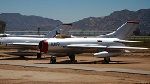
Mikoyan-Gurevich MiG-19 1955, Soviet, 909 mph Most of North Vietnam's MiG-19's were supplied by China, only being involved in the 1970s, years after the MiG-17 and MiG-21. Many North Vietnamese pilots stated they preferred the MiG-17 for maneuverability, or the MiG-21 for speed. MiG-19s shot down about 2 x A-6 Intruder (ground attack aircraft) and 7 x F-4 Phantom II, mainly with their 23mm or 37mm cannon. |
|
|
|
The Douglas A-4 Skyhawk was the US Navy's main light bomber over North Vietnam during the early years of the Vietnam War, at a time the USAF was flying the supersonic F-105 Thunderchief. Skyhawks carried out some of the first air strikes by the US, and a Marine Skyhawk is said to have dropped the last US bombs. A famous naval aviator who flew the Skyhawk was Cdr. John McCain. On the 1st May 1967, an A-4C Skyhawk piloted by LCDR Theodore R. Swartz, shot down a MiG-17 with an unguided Zuni rocket, the Skyhawk's only air-to-air kill in the war. |
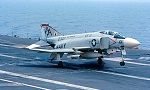 A-4 Skyhawk
|
|
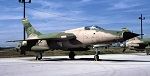
F-105 Thunderchief 1956, US, 1,390 mph The Republic F-105 Thunderchief was the largest single seat Fighter/Bomber ever built, capable of Mach 2. The F-105 was the main Strike Bomber over North Vietnam during the early years of the war. Of the 833 F-105 Thunderchiefs built before the end of the Vietnam War, almost half were lost to anti aircraft artillery and surface to air missiles. North Vietnamese MiGs claimed to have shot down about 47 of the F-105s. There were about 27 MiGs shot down by the 105s, mostly using their 30mm cannon and a few with the AIM-9 short-range, heat-seeking Sidewinder missiles. |
|
|
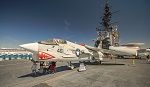
F-8 Crusader 1957, US, 1,225 mph The F-8 Crusader was a single engine aircraft carrier based Fighter built by Chance-Vought of Dallas/ Texas. Some experts at the time, with air to air missiles being fitted to most fighter aircraft, believed dogfights would no longer take place. The war in North Vietnam soon proved many Aircraft were still having to use their guns and cannon in some accounters with the enemy. The F-8 Crusader was credited with shooting down, 16 MiG-17s, and 3 MiG-21s, four with cannon, and 15 with AIM-9 short-range, heat-seeking Sidewinder missiles. North Vietnam claimed their MiGs shot down 11 x F-8 Crusader. |
|
|
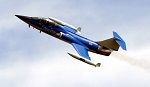
F-104 Starfighter 1958, U.S., 1,328 mph The Lockheed F-104 Starfighter was an American single engined, supersonic Interceptor in service from 1958 until 1969. The F-104 was rarely involved in encounters with MiGs, with no confirmed air-to-air kills. They were usefull though, as the MiG interceptors would avoid attacking missions with F-104 escorts. The US only built 296 of the 104s, as at that time, they failed to see the importance of air superiority. The Starfighter was not suitable for the fighter bomber role, as it lacked the payload and endurance of other U.S. aircraft. The last USAF Starfighters were taken out of active service in 1969. |
|
|
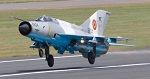
Mikoyan-Gurevich MiG-21 1959, Soviet, 1,385 mph The MiG-21 first saw action in the Vietnam War, one of the most advanced Aircraft at that time. Many North Vietnamese though, stated they preferred the MiG-17 as it was more maneuverable. Although the MiG-21 lacked the long range radar and missiles of the U.S. fighters, it was a real threat to US aircraft when used in high speed hit and run attacks. MiG-21 intercepts of the 1,390 mph F-105 Thunderchiefs, often forced the US aircraft to jettison their bombs, so they could fight the MiGs, or use their speed to leave the area. MiG-21s shot down about 15 x F-105 Thunderchief, 3 x F-8 Crusader, and 37 x F-4 Phantom II, most with their Vympel K-13 (AA-2 Atoll) short-range, heat-seeking missiles. Also armed with 23mm or 30 mm cannon. |
|
|
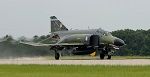
F-4 Phantom II 1960, U.S., 1,472 mph The McDonnell Douglas F-4 Phantom II is a two-seat, twin-engined Fighter-Bomber built for the U.S. Navy, Marine Corps and Air Force. From their deployment to Vietnam in 1965, Phantoms were used for air superiority, ground attack, and bombing sorties into Laos and North Vietnam. As many of the F-105 Thunderchiefs were being lost in the war, the US began using the F-4 Phantoms more for bombing missions, and after the remaining 105s were withdrawn from combat in 1970, Phantoms became the main U.S. fighter-bomber. A total of 761 Phantoms were lost in the Vietnam War, most to AAA, some to SAM missiles, some to accidents, and about 55 to MiGs. F-4s shot down about 34 x MiG 17s, 8 x MiG 19s, and 66 x MiG 21s, most with the AIM-9 short-range, heat-seeking Sidewinder missiles, or the AIM-7 Sparrow medium-range, semi-active radar homing air-to-air missile, only a few by their 20mm guns. |
|
|
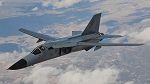
General Dynamics F-111 1967, U.S., 1,650 mph The General Dynamics F-111 is a medium-range Strategic Bomber and Strike Aircraft that entered the Vietnam War in September 1972. F-111s did not need tankers, and could carry the bomb load of four F-4 Phantoms. In over 4,000 combat missions over Vietnam, they only had six combat losses. There is little information on the six losses, as to whether they were downed by surface to air fire, or, crashed due to the F-111 flying high speed, low level missions. The F-111 was originally intended to be a fighter-bomber, but was rarely fitted with the intended M61 Vulcan 20 mm gatling cannon or Air-to-Air Missiles, so would just out-run any MiGs it encountered. |
|
|
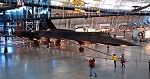
SR-71 Blackbird 1968, U.S., 2,200 + mph The Lockheed SR-71 is an advanced, long-range, Mach 3 capable Reconnaissance Aircraft used for missions over North Vietnam from 1968. The Soviet built S-75 SAM missiles, used by North Vietnam, had a maximum altitude of around 60,000ft, and speed of about 1,864 mph, so were not capable of hitting the SR-71 flying at 85,000ft, and 2,200 mph. Air to Air missiles of the time of the Vietnam War flew at about: AIM-9 Sidewinder 1,300 mph, AIM-7 Sparrow 3,000 mph. The Soviet designed Vympel K-13 Air to Air missiles fitted to MiGs during the Vietnam War, were thought to fly at about 1,900 mph. |
|
|
Vietnam War era aircraft that never took part in the war |
|
|
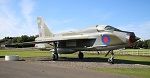
English Electric Lightning 1959, British, 1,518 mph The English Electric Lightning was a British supersonic Fighter aircraft of the Cold War era, known for its high speed for the time and rate of climb few modern fighters can better. RAF pilots stated it was like "being saddled to a skyrocket". Having never being involved in combat, this Aircrafts claim to fame was beating the mighty F-15 Eagle in a race to 30,000 feet. From 1974, the British RAF began to replace these aircraft with the US bult Phantom FGR.2. Kuwait retired it's Lightnings in 1977. Saudi Arabia replaced theirs in 1985 with European built Tornados, and the British RAF took their last Lightnings out of service in July 1988. |
|
|
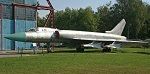
Tupolev Tu-28 1963, Soviet, 1,150 mph The Tupolev Tu-128 was a long-range Interceptor, the world's largest production Fighter Aircraft. This was an Interceptor Fighter intended for the high-altitude patrol of sections of the Soviet Union with no surface-to-air missiles. Equipped with a large I-band radar, the Tu-28 was armed with two radar-homing, and two infra-red homing Bisnovat R-4 missiles. The Tu-28 was withdrawn from service throughout the eighties, replaced by the MiG-31 in 1990. The Tu-28 is not known to have engaged another Aircraft in battle. |
|
|
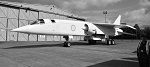
BAC TSR-2 1964, British, 1,630 mph? The BAC TSR-2 was a Cold War strike Aircraft designed to for low altitude, high speed attacks. On its fist supersonic flight, the TSR-2, with one afterburner lit, accelerated away from the chase Mach 2 Lightning, even with the Lightning using full afterburner on both engines. Only one TSR-2 flew before the project was cancelled due to cost. The TSR-2 was said to be by far the most advanced military aircraft of it's day, potentially Mach 3. Although Britain lost a massive investment in this Aircraft, much of the technology was later used producing the Mach 2 passenger Jet, Concord. |
|
|
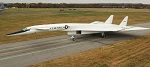
XB-70 Valkyrie 1964, U.S., 2,056 mph Although this Aircraft never made it into service, the thought of its exsistance forced the Soviets to build exceptionally fast Fighters capable of matching its performance. This North American Aviation's B-70 Valkyrie was a nuclear-armed, six-engined bomber Aircraft, capable of flying Mach 3 at high altitude. The cost of the Aircraft, along with new Russian anti-aircraft missiles that could have shot these Aircraft down, led to the cancellation of the program in 1961. On the 4th February 1969, Valkyrie number one was retired and flown to the United States Air Force at Wright-Patterson Air Force Base near Dayton/ Ohio to be displayed in their Museum. |
|
|
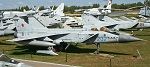
Mikoyan-Gurevich MiG-25 Foxbat 1970, Soviet, 2,115 mph The MiG-25 is a high-speed Interceptor with a top speed of Mach 3.2, a powerful radar, and four air-to-air missiles. None of these Aircraft were deployed to the Vietnam War. The MiG-25 forced the U.S. to develope the 1,875 mph F-15 Eagle. With the MiG-25s speed advantage, on the few ocasions they encountered western Aircraft in the Israeli and Gulf wars, they caused considerable concern with their high speed, forcing their enemy to use ambush tacktics, along with superior radar and weapons to bring them down. |
|
|
| Home Page |
|
|