 |
Home Page |
Latest Fighter Aircraft |
|
The latest Fighter Aircraft evolved after the Vietnam and Falklands wars proved short range Air-to-Air Missiles had become more effective than Guns or Cannon. Most Air-to-Air Kills from then on would be achieved with either Short-Range Heat-Seeking Missiles, or Medium-Range to Long- Range (out of visual sight) Radar Guided Missiles. A combination of Pilot Training, Speed, Radar, Missiles and now Stealth, determines what are the most affective Fighters. The only way to really gauge the packages of each Aircraft, is through direct combat and success in Wars. This can be misleading at times though, as most countries that build Aircraft, only export versions with less capable electronics and radars than on their own versions. This is a safeguard, as in the event any were to be used against the manufacturing country, they would be at a disadvantage. Beyond Visual Range missile usually refers to a Radar-Guided Air-to-Air Missile that is capable of hitting targets beyond 20 nautical miles. Short-range Heat-Seeking Missiles have a range of between 0.5 and 11 miles. Aircraft Cannon, or Guns, have a kill range between 350 and 2,000 meters. Most modern Aircraft are still fitted with Cannon, although rarely used in Air-to-Air combat now. The deadliest Surface to Air Missiles, such as the Russian S-300, can hit targets up to 120 miles away, fly at over 4,000 mph, and climb to an altitude of 27,000 m (88,583 ft). The most advanced modern Fighters can operate up to 2,000 mph, and to an altitude of about 19,000 m (65,000 feet), so cannot outfly the Missiles. Large Images in a slide show of all these aircraft |
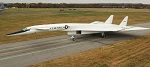
XB-70 Valkyrie 1964, U.S., 2,056 mph Although this fast Bomber never made it into service, the Soviets built exceptionally fast Fighters such as the MiG-25 Foxbat capable of matching its performance. This North American Aviation's B-70 Valkyrie was a Nuclear-Armed, six-engined Bomber Aircraft able to fly Mach 3 at high altitudes. The cost of the Aircraft, along with the the first high altitude Anti-Aircraft Missiles, led to the cancellation of the Aircraft in 1961. On the 4th February 1969, Valkyrie number one was retired and flown to the National Museum of the United States Air Force at Wright-Patterson Air Force Base by Dayto in Ohio. |
|
|
|
|
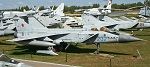
Mikoyan-Gurevich MiG-25 Foxbat 1970, Soviet, 2,115 mph The MiG-25 is a high-speed, low-range Interceptor with a top speed of Mach 3.2, a powerful radar, and carries Bisnovat R-40 long-range air-to-air missiles. The MiG-25 forced the U.S. to build the 1,665 - 1,875 mph F-15 Eagle. With its speed advantage, the Mig-25 was a great concern during the Israeli and Gulf wars. In 1981, Israeli F-15A's managed to trap and shoot down 2 Syrian MiG 25s with AIM-7F Sparrow missiles. Two MiG-25s were also shot down by U.S. F-15Cs during the Gulf War. After the war, in 1992, a U.S. F-16 shot down a MiG-25 in the no-fly zone in southern Iraq. One U.S. Navy F/A-18 Hornet was shot down on the first night of the Gulf War, believed to be with a Bisnovat R-40 long-range air-to-air missile, fired from a MiG-25. |
|
|
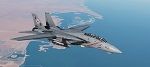
F-14 Tomcat 1974, U.S., 1,544 mph The F-14 was used to replace the F-4 Phantom in the U.S. Navy from September 1974. The F-14 shot down other Aircraft for the first time on the 19th August 1981 over the Gulf of Sidra after two F-14s from the Aircraft Carrier USS. Nimitz were attacked by two Libyan 1,155 mph Soviet built Su-22 Fitters. The F-14s managed to avoid the short-range heat seeking AA-2 Atoll missiles and returned fire, shooting down both Libyan aircraft with their short range heat-seeking Sidewinder missiles. 4th January 1989, 2 U.S. Navy F-14s shot down two Libyan 1,553 mph MiG-23 Floggers over the Gulf of Sidra in a second incident. F14s are also armed with the AIM-7 Sparrow medium-range semi-active radar homing air-to-air missiles, and AIM-54 Phoenix radar-guided, long-range air-to-air missiles, also a 20mm cannon. |
|
|
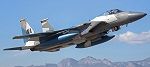
F-15 Eagle 1976, U.S., 1,665 mph - 1,875 mph The McDonnell Douglas F-15 Eagle is a Fighter designed to gain and maintain air superiority. The fastest U.S. Fighter to date with its main rival at the time being the Soviet MiG-25 Foxbat, capable of 2,115 mph, although that speed could only be maintained for short periods. In 1979–81 during Israeli Lebanese border disputes, F-15As shot down 13 Syrian MiG-21 Fishbeds, and two Syrian MiG-25 Foxbats. F-15A and B models were used by Israel in the 1982 Lebanon War where Israeli F-15s shot down 23 MiG-21 Fishbeds and 17 MiG-23 Floggers. The Persian Gulf War in 1991 saw U.S. F-15s shoot down five MiG-29 Fulcrums, two MiG-25 Foxbats, eight MiG-23 Floggers, two MiG-21 Fishbeds, two Su-25 Frogfoots, four Su-22 Fitters, one Su-7, and six Mirage F1s. No F-15s have been shot down by enemy Aircraft to date. Armed with the AIM-9 Sidewinder heat-seeking, short-range missiles, AIM-7 Sparrow medium-range semi-active radar homing missiles and AIM-120 Advanced Medium-Range Air-to-Air Missiles, or AMRAAM, also a 20mm cannon. |
|
|

Tupolev Tu-144 1975, Soviet, 1,553 mph The Tupolev Tu-144 was the first Supersonic transport Aircraft capable of carrying 140 passengers with a top speed few modern Fighter Aircraft can achieve. A prototype first flew on the 31st December 1968 by Moscow, two months before the British & French designed Concorde. The Aircraft had two major crashes, with the first at the Paris Air Show on the 3rd June 1973. Tu-144s entered service on the 26th December 1975, flying mail and freight between Moscow and Alma-Ata in Kazakhstan. Its passenger services began in November 1977 and continued until a Tu-144 crash landed during a test flight, with crew fatalities on the 23rd May 1978. The last passenger flight was on the 1st June 1978. The Tu-144 was then only used by Russia as a flying laboratory, and one by the U.S. in 1996 to test a proposed new generation Supersonic Aircraft. |
|
|
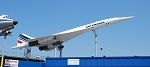
Concorde 1975, British & French, 1,350 mph Concorde was the more successful of the only two supersonic Airliners to have ever operated commercially, the Tupolev Tu-144, nicknamed Concordski, being the other. The Tu-144 had a higher top speed, but required more fuel and had less range than Concorde. Capable of carrying 128 passengers, Concorde entered service in 1976 and continued in service for 27 years. It flew regular transatlantic flights from London Heathrow for British Airways, and Paris Charles de Gaulle for Air France to New York JFK and Washington Dulles, flying these routes in under half the time of other Airliners. The only Concorde to crash, was Air France Flight 4590 at Gonesse/ France, killing all 100 passengers, 9 crew and 4 people on the ground, on the 25th July 2000. That crash led to the withdrawal of Concorde from service soon after. |
|
|
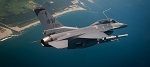
F-16 Fighting Falcon 1978, U.S., 1,500 mph The Lockheed Martin F-16 Fighting Falcon is a multi role lightweight Fighter with sales to about 25 Air Forces around the world. On 27th December 1992, during Operation Southern Watch, an F-16D shot down an Iraqi MiG-25 Foxbat in restricted airspace over southern Iraq with an AIM-120 AMRAAM (Advanced Medium-Range Air-to-Air Missile); this was the first U.S. F-16 kill since the F-16 was introduced; and also the first AMRAAM kill. On the 17th January 1993, a U.S. F-16C shot down an Iraqi MiG-23 with an AMRAAM missile for the second U.S. F-16 victory. Also armed with the AIM-9 Sidewinder heat-seeking, short-range missiles, and AIM-7 Sparrow medium-range semi-active radar homing missiles, also a 20mm cannon. |
|
|
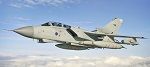
Panavia Tornado 1979, European, 1,511 mph The Panavia Tornado is a twin-engine combat Aircraft built by the UK, West Germany and Italy. There are three main versions of the Tornado; the Fighter-Bomber, Electronic Combat/Reconnaissance, and the Air Defense Interceptor. This is claimed to be one of the world's most sophisticated and capable attack Aircraft, with a large payload and long range. There is no evidence so far of the Tornado being involved in direct Air-to-Air Combat with another Fighter. Armed with the AIM-132 advanced short-range, heat-seeking, air-to-air missiles and Skyflash medium-range air-to-air missiles, also a 27mm cannon. |
|
|
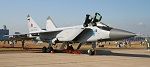
Mikoyan MiG-31 Foxhound 1982, Soviet, 1,868 mph The MiG-31 is a supersonic interceptor Aircraft built to replace the MiG-25 Foxbat. The MiG-31 was the most advanced interceptor of the Soviets at that time, with a better range and more maneuverabe than the MiG-25 Foxbat. There seem to be no reports of MiG-31s in Air-to-Air Combat with other Fighter Aircraft. Armed with Molniya R-60 short-range heat-seeking missiles, Vympel R-77 medium-range active radar-guided missiles, and Bisnovat R-40 long-range semi-active radar homing missiles, also a 23mm cannon. |
|
|
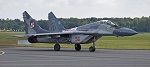
Mikoyan MiG-29 Fulcrum 1983, Soviet, 1,518 mph The MiG-29 is a Fighter Aircraft designed for short-range air-superiority in the Soviet Union. The MiG-29 remains in use by the Russian Air Force, as well as in many other nations, built to counter American fighters such as the F-16 Fighting Falcon and the F/A-18 Hornet. The U.S. claimed their F-15 Eagles shot down 5 MiG-29s during the Gulf War. F-15 Eagles & F-16s are believed to have shot down between 3 & 6 MiG-29s during the Yugoslav War in the 1990s, although the Yugoslav MiGs were said to be so run down, some might have crashed, or even been shot down by their own Surface-to-Air Missiles. Armed with Vympel R-60 short range heat-seeking air-to-air missiles and Vympel R-77 medium-range, air-to-air radar-guided missiles, also a 30mm cannon. |
|
|
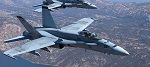
F/A-18 Hornet 1983, U.S., 1,127 mph The McDonnell Douglas F/A-18 Hornet is an all-weather, light-weight, carrier capable strike fighter, designed to attack both ground and aerial targets. They were used alongside the heavier and more expensive to produce and run 1,544 mph F-14 Tomcat. Entered service with the U.S. Navy, U.S. Marine Corps and with air forces of several other nations. Two F/A-18s from the Aircraft Carrier USS Saratoga claimed two kills during the Gulf War, both MiG-21s. Armed with AIM-9 Sidewinder heat-seeking, short-range missiles and AIM-7 Sparrow medium-range semi-active radar homing missiles, also a 20mm cannon. |
|
|
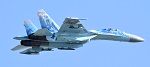
Sukhoi Su-27 Flanker 1984, Soviet, 1,550 mph The Sukhoi Su-27 is a long-range all-weather tactical fighter built to gain and maintain air superiority. It was built to counter the U.S. fighters of this time, such as the 1,665 - 1,875 mph F-15 Eagle. The Su-27 has seen little action since entering service. Ethiopian Su-27s claimed to have shot down 6 Eritrean MiG-29 Fulcrums. Armed with Vympel R-73 short range heat-seeking air-to-air missiles and Vympel R-77 medium-range, air-to-air radar-guided missiles. It also has a 30mm cannon. |
|
|
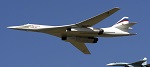
Tupolev Tu-160 1985, Soviet, 1,380 mph The Tupolev Tu-160 is a supersonic heavy Bomber, the heaviest combat Aircraft ever built & fastest heavy Bomber. This was the last Soviet strategic Bomber built with production still continuing, with around 16 still in service with the Russian Air Force. Only a few of the modern Fighter Aircraft have a higher top speed. |
|
|
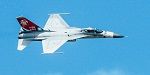
AIDC F-CK-1 Ching-kuo 1994, Republic of China (Taiwan), 1,350 mph The Republic of China Air Force's AIDC F-CK-1 Ching-kuo is a light Fighter built between the Taiwanese and United States defense companies. There have been no air-to-air encounters involving these Aircraft so far. Armed with Tien Chien 1 short range infrared-seeking missiles and Tien Chien 2, active radar homing Beyond Visual Range missiles that are claimed to be in the same class as the U.S. designed AIM-120 AMRAAM, aslo a 20mm cannon. |
|
|
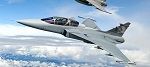
JAS 39 Gripen 1996, Swedish, 1,320 mph The Saab JAS 39 Gripen is a light-weight Fighter Aircraft built by the Swedish aerospace company Saab. The Swedish Airforce claim the Gripen is the world's top light-weight multi role combat Aircraft today. The Aircraft is in service with a nunber of countries such as the Swedish Air Force, Czech Air Force, Hungarian Air Force, South African Air Force, and Royal Thai Air Force. Armed with the AIM-120 Advanced Medium-Range Air-to-Air Missile, or AMRAAM, a modern Beyond Visual Range air-to-air missile, and AIM-9 Sidewinder, heat-seeking, short-range, air-to-air missiles, aso a 27mm cannon. |
|
|
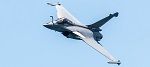
Dassault Rafale 2000, French , 1,320 mph The Dassault Rafale is a French twin-engined delta-wing multi-role Fighter Aircraft built by Dassault Aviation. The Rafale is produced for land-based and carrier-based for the French Navy. It has also been marketed for export, with Egypt, India and Quatar the first to buy. Armed with the French designed MBDA MICA fire-and-forget short-range air-to-air missiles, and the Meteor, an active radar guided beyond-visual-range air-to-air missile (BVRAAM), also a 30mm cannon. |
|
|
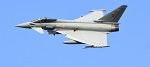
Eurofighter Typhoon 2003, European, 1,480 mph The Eurofighter is a tactical Fighter designed to gain and maintain air superiority, also with air-to-ground capabilities. After the F-22 Raptor, the Eurofighter is considered by many experts to be the most advanced fighter now in development. The Aircraft has entered service with the UK Royal Air Force, German Luftwaffe, Italian Air Force, Spanish Air Force, Austrian Air Force, and Saudi Arabia. Armanent for the Eurofighter is the short-range heat-seeking AIM-9 Sidewinder, and the Meteor, an active radar guided beyond-visual-range air to air missile (BVRAAM), also a 27mm cannon. |
|
|
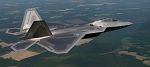
F-22 Raptor 2005, U.S., 1,600 mph The Lockheed Martin/Boeing F-22 Raptor is a Fighter Aircraft with stealth technology. It is an air superiority Fighter, also capable of ground attack, electronic warfare and signals intelligence roles. The F-22 is said by many sources to be the world’s top air superiority Fighter. The US Air Force claim the F-22 cannot be matched by any known, or projected Fighter Aircraft. Armed with the AIM-9 Sidewinder heat-seeking short-range air-to-air missiles, and the AIM-120 Advanced Medium-Range Air-to-Air missile, or AMRAAM also a 20mm cannon for dog fights. |
|
|
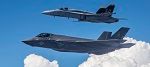
F-35 Lightning II 2011, U.S., 1,200 mph The Lockheed Martin F-35 Lightning II is a single-seat, single-engine, stealth-capable strike Fighter. It is also a multi-role Aircraft that can perform close air support and tactical bombing. The F-35 seems to be a smaller, one-engine version of the two-engine F-22 Raptor. The F-35 is to be built in three versions, such as conventional takeoff and landing, short takeoff, and vertical landing for aircraft carriers. Countries to take part in the funding and development of the F-35 are United Kingdom, Italy, Netherlands, Canada, Turkey, Australia, Norway and Denmark. Armed with AIM-9 Sidewinder heat-seeking short-range air-to-air missiles, and AIM-120 Advanced Medium-Range Air-to-Air missile, or AMRAAM, also a 25mm cannon. |
|
|
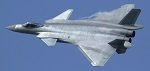
Chengdu j-20 2017, China., 1,305 mph The Chengdu J-20 Mighty Dragon is a single-seat, stealth fighter built to compete with the new US and Russian stealth fighters. This fighter is armed with short and long range missiles for air to air combat, and precision bombs for ground attack, it does not have a cannon, so not intended to be getting into dog fights or strafing. |
|
|
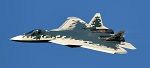
Sukhoi Su-57 Felon 2020, Soviet., 1,324 mph The Sukhoi Su-57 Felon is a single-seat multirole fighter that will take over from most older Russian fighters. This fighter has stealth, great manouerability, and can carry a wide range missisles for long and short air to air combat, ground attack, and ship attack, also a 30mm cannon. |
|
|
| Home Page |
|
|