|
The city of London evolved after the Roman
invasion of England in 43AD. The Romans first
conquered Southern England then began moving north
until they reached the River Thames. This vast river
that split the east of England in two, greatly
restricted travel in the area. The Romans solved the
problem by building a wooden bridge, just east of
where London Bridge stands today. With that bridge
providing a link from the South of England to Central
England, the area attracted a lot of trade with the
City of Londinium beginning to grow around the
bridge.
London is now one of the worlds most interesting
cities, crammed full of historic buildings, museums
and parks. There are also many historic locations
such as Windsor Castle situated only a few miles
outside the city.
The currency in England is the British Pound.
Beer prices .
Currency Converter.
Flights take about 1 hour 10 minutes between UK
& Ireland Airports and London Airports.
Most UK based Airlines or International Airlines
also provide flights to London Airports.
There are five major Airports around London, see
bottom of the page for information.
|
|
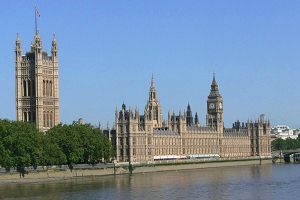
The Palace of
Westminster, or better known as the
Houses of Parliament, was first built on this
site during the reign of Edward the Confessor
(1042-1066). The present building that is seen
today, dates from the 1840s.
A tour of the Houses of Parliament and a
climb to the top of Big Ben can be taken.
Tours
Information.
The Palace of Westminster is situated in
London Centre close to the London Eye ferris wheel. The
area is regarded as the centre of the city,
where the hop on hop off tour buses can be
booked.
Google Map /
Reviews . More
Information . Tour Buses .
|
England Map . Helicopter Tours
|
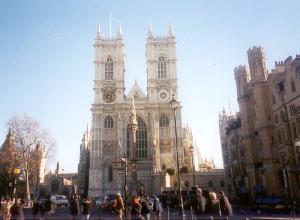
Westminster Abbey is
situated only a few hundred yards north of the
Houses of Parliament, on the tour bus
route.
Work on the original Westminster Abbey began
during the reign of Edward the Confessor
(1042-1066). That building was built on the
site that originally contained a modest
Benedictine Abbey Church named St Peters.
Edward the Confessor died within ten days of
Westminster Abbey’s consecration. He
became the first of over 3,000 people to be
buried within its floors, walls, and many
tombs. King Henry III (1216-1272) had the Abbey
completely redesigned by the architect Henry de
Reynes into the gothic style that can be seen
today. All that remains of the original Abbey
are the foundations.
King Henry VII (1485-1509) and King Henry
VIII (1509-1547) commissioned further work to
be carried out that saw the Abbey extended. All
but two English Monarchs have been crowned
there beginning with William the Conqueror on
25th December 1066. The two kings that broke
with tradition were Edward V and Edward VIII.
There are many famous people buried throughout
the Abbey including Queen Elizabeth I, Mary
Queen of Scots, the poets Charles Dickens and
Robert Browning, musician George Frederick
Handle, actor Lawrence Olivier, missionary Dr
David Livingston, scientist Isaac Newton,
biologist Charles Darwin, and Thomas Parr
believed to have been 152 years and 9 months
old.
|
 |
The only person buried standing up is the
poet Ben Jonson who begged 18 inches of ground
from King Charles I.
The abbey is open Monday-Sunday 08.00-18.00
with an entrance fee of around £18.00 per
adult, £8.00 for under 18s and free
admission for under 11s. For more information,
visit the website www.westminster-abbey.org/.
Google
Map/Reviews.
|
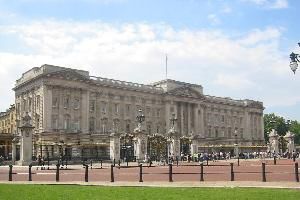
Buckingham Palace is
situated about 1 mile west of the Houses of
Parliament, on the tour bus route.
Britain’s monarchs have changed their
official residences throughout the centuries
from the Tower of London – Palace of
Westminster – Whitehall Palace –
Kensington Palace – St James’s
Palace and now Buckingham Palace. This palace
was originally constructed in 1703 as a red
brick building named Buckingham House. During
the reign of King George IV (1820-1830)
Buckingham Palace was redesigned to its present
form. Although King George IV is responsible
for the design of the palace, he never managed
to stay there as he died before its
completion.
|
|
Queen Victoria (1837-1901) became the first
Sovereign to take up residence in Buckingham
Palace in July 1837, it has remained the
official residence of the Royal Family ever
since.
For more information on Buckingham Palace,
events and opening times, view the website
www.royal.gov.uk.
Google Map /
Reviews.
|
 |

More
Information . Google Map /
Reviews.
|
St James's Palace is
situated about 1.2 miles northwest of of the
Houses of Parliament, only a few hundred yards
north of Buckingham Palace, on the tour bus
route.
The building of St James’s Palace was
commissioned during the reign of King Henry
VIII (1509-1547). This building is built on a
site that previously contained the hospital of
St James for leper women. St James’s
present look is attributed to Sir Christopher
Wren as he was commissioned to redesign the
palace in the late 1600s. Queen Anne
(1702-1714) became the first Royal to take up
residence in St James’s after the 1698
fire that destroyed Whitehall Palace. St
James’s then became the official home of
British Monarchs until Queen Victoria took the
throne in 1837, and set up residence in
Buckingham Palace.
St James’s Palace is now the official
residence of Prince Charles. It can only be
viewed from the outside, as it is rarely open
to the public.
|
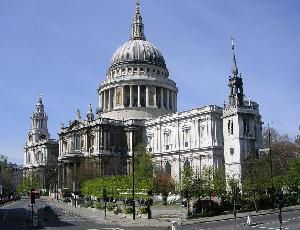
St Paul's Cathedral
is situated 2 miles northeast of the Houses of
Parliament, on the tour bus route.
Construction of the original Old St
Paul’s Cathedral began in 1087 under the
reign of King William II (1087-1100). That
cathedral built in Gothic style, became the
largest ever built in England with the highest
spire of any English cathedrals. Old St
Paul’s was so large; work on its
completion took until the 14th Century. After
being hit by lightning, and years of being run
down, the Great Fire of London in 1666 finally
damaged that cathedral beyond repair.
The reign of King Charles II (1660-1685) saw
Sir Christopher Wren commissioned to design the
new St Paul’s that is seen today. Work
began on the new building in 1675 with the last
stone laid in 1710. The present St Paul’s
is regarded as being the second largest
cathedral in Europe, with the largest being St
Peters in Rome. St Paul’s crypt is
probably the largest of its kind in Europe,
holding many famous people including Lord
Nelson, who died at the battle of Trafalgar in
1805. That funeral, one of the largest ever in
London, ended with Nelson being interred in the
crypt directly below the cathedrals great
dome.
|
|
Other exceptionally large events at St
Paul’s were: Winston Churchill’s
funeral 30th January 1965, and the wedding of
Prince Charles and Princess Diana 29th July
1981.
St Paul’s Cathedral is open to the
public Monday-Saturday 08.30-16.00 with an
entrance fee of around £18 per adult and
£8 for children under 16. For more
information, view the website www.stpauls.co.uk.
Google Map /
Reviews.
|
 |
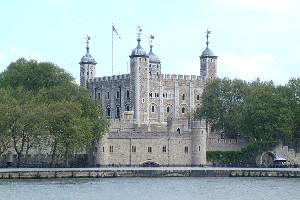
The Tower of London
is situated about 3 miles northeast of the
Houses of Parliament, on the tour bus
route.
The building of the Tower of London began
shortly after William Duke of Normandy
(Conqueror) came to power in 1066. This
stronghold originally began, as the White Tower
that is at the centre of what is now a large
sprawling castle covering 84 acres. Most of the
outer walls were added during the reign of King
Henry III (1216-1272). Henry III is also
credited with building ‘Traitors
Gait’ an entrance that leads to the River
Thames, that can only be accessed by boat.
This entrance became famous, as all the
prisoners held and executed in the castle,
would enter through that passage. Executions
were carried out within the castle walls,
either by hanging at Tower Hill, or by
beheading at Tower Green. People beheaded in
these grounds included Anne Boleyn (1536) the
second wife of Henry VIII and mother of
Elizabeth I, Katherine Howard (1542) Henry VIII
fifth wife, lady Jane Grey, and the Earl of
Essex.
|
 |
The Crown Jewels have been kept here for the
past 600 years containing some of the largest
diamonds in the world, and along with the
castles macabre history, the Tower of London
has become London’s most popular
site.
Visiting times are from Monday-Saturday
09.00-17.00 and Sundays 10.00-17.00 with an
entrance fee of around £24 per adult and
£11 per child, under 5 free. For more
information, visit the website www.hrp.org.uk/toweroflondon.
Google Map /
Reviews.
|
|
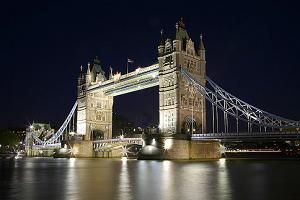
Tower Bridge is
situated about 2.8 miles northeast of the
Houses of Parliament, on the tour bus route,
close to the Tower of London.
Construction of Tower Bridge took place
between 1886 and 1894. This fully operational
drawbridge still has to be used to this day to
allow large ships to pass up the river.
Tours of the bridges towers and mechanics
are conducted daily at a cost of around £9
per adult and £4 per child, under 5 free.
For more information, visit the website:
www.towerbridge.org.uk/TBE/EN/.
Google Map /
Reviews.
|
 |
Google Map /
Reviews.
|
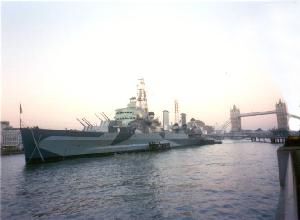
HMS Belfast is
situated 2.6 miles northest of the Houses of
Parliament, close to Tower Bridge.
HMS Belfast is the only surviving large
European warship that served during World War
II. This 9,320-ton cruiser entered service in
1939, seeing action in European waters before
being deployed to the Pacific War against
Japan, and later Korea.
Belfast has been moored near Tower Bridge
since 1971. It was opened to the public 21st
October of that year. The ship is now open to
the public daily from 10.00-17.00 with an
entrance fee of around £16 per adult. For
more information, visit the website www.iwm.org.uk/visits/hms-belfast.
|
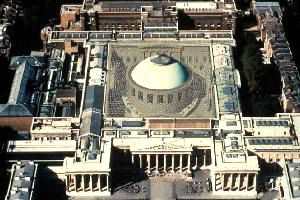
The British Museum
is situated about 1.4 miles north of the Houses
of Parliament, on some tour bus routes.
The architect Robert Smirke was commissioned
to design the British Museum during the reign
of King George IV (1820-1830). The building of
this museum came about through the need for a
suitable building to house the Kings Library
and the ever-increasing ancient museum
artifacts being collected from around the
world. Work on the museum began in 1822 with
the final stages of the main building being
completed in 1856. Work began on the round
reading room situated in the courtyard the
following year. The installation of the glass
roof that now covers the courtyard, and the
refurbishment of the library, began in
1998.
|
|
This museum is also crammed with ancient
artifacts from around the world from countries
such as Egypt, Greece and Rome.
You can visit the British Museum free of
charge Saturday-Wednesday 10.00-17.30 and
Thursday- Friday 10.00-20.30. For more
information and how to find the museum, view
the website www.britishmuseum.org.
Google Map /
Reviews.
|
 |
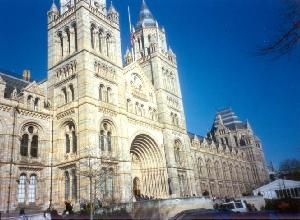
The Natural History
Museum is situated about 2.8 miles west
of the Houses of Parliament, on some tour bus
routes.
Professor Richard Owen successfully
petitioned the Gladstone Government for funds
to build the Natural History Museum during the
reign of Queen Victoria. Britain’s vast
amount of natural history artifacts had been
stored in various damp and cramp places before
this building was completed. The young
architect Alfred Waterhouse was chosen to
design the new building with work beginning in
1860. This building became one of the first of
the Victorian age to use iron and steel in its
superstructure. Although the Gothic style looks
like stone, the exterior is actually clad in
terracotta.
|
 |
The Natural History (Science) Museum opened
to the public in 1881. It is crammed full of
dinosaurs, whales, insects, fossils and stuffed
animals from all over the world.
The museum is open to the public
Monday-Saturday 10.00-17.50, Sunday 11.00-17.50
free of charge although they do accept
donations for the upkeep of the building. For
more information, visit the website www.nhm.ac.uk/.
Google Map /
Reviews.
|
Windsor Castle is
situated about 22 miles west of London
centre.
Windsor Castle originated as a mote and
bailey fortification built by William the
Conqueror after his victory in 1066. Work to
convert the building to stone began during the
reign of King Henry II (1154-1189). King Henry
III (1216-1272) is also credited with having
the castle extensively expanded. Successive
monarchs continued to extended the castle into
what is now the largest continually inhabited
castle in the world. This castle contains
apartments that are still used by the Royal
Family to this day, normally at weekends.
Windsor Castle is about a 50-minute train ride
from London’s Waterloo station, about
£10 return. The train station at Windsor
sits directly below the Castle, providing a
impressive view on arrival. Windsor Castle is
open to the public from 10.00-17.30 in summer
and 10.00-16.00 in winter, there is an entrance
fee of about £20 per adult, £12 for
under 17s and no charge for under 5s.
St Georges Chapel is situated inside the
walls of Windsor Castle. As with Westminster
Abbey, there are many famous people buried
throughout the building, including Henry VIII
and Jane Seymour, Charles I, Queen Elizabeth II
father King George VI and his wife Elizabeth.
Princess Margaret became the first Royal to be
cremated, as it was the only way she could be
buried next to her father (King George VI) in a
small room within St Georges Chapel.
|
|
London's four main
train stations, Euston, Kings
Cross, Paddington & Waterloo, are all
close to the city centre, Train Station
Map. England Map.
From these stations, other historic
cities and towns can be visited by Train
at relatively low cost, the earlier you
book the tickets, the less expensive they
are. Fares cost from £20 day
return.
Cambridge: 60 miles north of
London. Kings Cross Station,
Bath: 115
miles west of London. Paddington Station,
1 hour 30 mins,
Oxford:
59 miles west of London. Paddington
Station, 1 hour,
Windsor:
25 miles west London. Waterloo Station, 1
hour,
York: 210
miles north of London. Kings Cross
Station, 2 hours, fare check Large
Image.
Edinburgh/Scotland: 404
miles north of London. Kings Cross
Station, 4 hours 30 mins.
Check prices at www.thetrainline.com
Other top attractions in London with
website's such as the London Eye, Madam
Tussaud's, London Zoo, London Dungeon and
Kensington Palace can be found at
www.londonforfun.com/London-sights.htm.
For Tours in London and from London,
visit: www.sightseeingtourslondon.co.uk
. Also: Viator Tours
London .
For theatre tickets and information on
London's West End Theatres, visit the
website www.lastminutetheatretickets.com
For a more history of London, visit
en.wikipedia.org/wiki/London.
London Airports
Heathrow
Airport is situated 17 miles west of
London Centre. Buses run regular to and
from this airport and many hotels in
London at about £6 each way. Bus / Taxi
Information . Taxis cost about £40
between the Airport and London centre .
Google
Map. Wiki Page for
flights . Car Hire
Companies .
Gatwick Airport
is situated 28 miles south of London, 30
minutes from central London via the
non-stop Gatwick Express rail service,
standard single ticket costs about
£17 and a standard return is about
£25. Tickets can be bought on board
at no extra cost. Regular coach services
offer less expensive travel to London and
Taxis cost about £60 between the Airport
and London centre.
Bus/Train/Taxi Information .
Google
Map . Wiki Page for
flights . Car Hire
Companies .
Ryanair
provide regular flights between London
Stanstead and other UK Airports such as:
Cork . Derry . Dublin . Edinburgh .
Glasgow /Internalional . Knock . Shannon
.
Stanstead
Airport is situated 38 miles north of
London. The Stansted Express train runs
every 15 minutes reaching London
Liverpool Street in 45 minutes with
prices from £8 each way. Frequent coaches
run from Stansted to London destinations
including Liverpool Street, Victoria,
Stratford, Baker Street and Kings Cross
with fares starting at about £7. All
services call at the airport coach
station, directly opposite the terminal.
Taxi prices are about £70 between the
Airport and London Centre.
Bus/Train/Taxi Information.
Google
Map . Wiki Page for
flights . Car Hire
Companies .
Luton
Airport is situated 34 miles
northwest of London. Regular rail
services to central London take as little
as 21 minutes with East Midlands Trains
and 25 minutes with First Capital Connect
with prices about £19 each way between
the airport and London centre. Regular
express coaches link between London Luton
Airport and Central London from the front
of the terminal with prices around £12
each way. Taxis cost from £60 each
way.
Bus/Train/Taxi Information .
Google
Map . Wiki Page for
flights . Car Hire
Companies .
London City
Airport is situated 9 miles east of
London. The website gives good
information on Taxi prices, buses, trains
and DLR services to London. Bus/Train/Taxi Information.
Taxis Cost about £35 between the Airport
and London centre.
Google
Map. Wiki Page for
flights . Car Hire
Companies .
All London
Airports Transfers Online Booking/ Fare
Checks .
|
|
|
|
